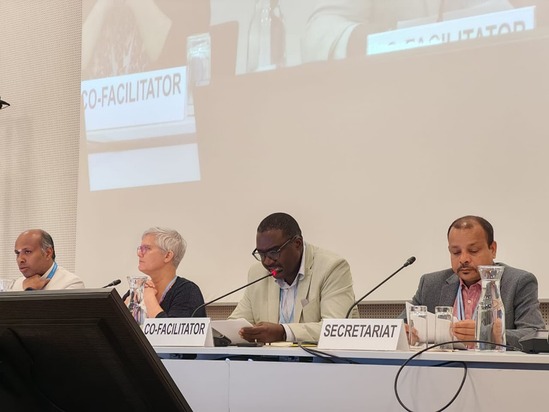
In a significant demonstration of Zambia's commitment to global climate action, the National Institute for Scientific and Industrial Research (NISIR) led the national delegation at the 62nd Sessions of the UNFCCC Subsidiary Bodies, held in Bonn, Germany, in June 2025.
Dr. Alick Muvundika, NISIR's Deputy Director, headed the Zambian delegation, representing the nation in critical negotiations on science and technology under the United Nations Framework Convention on Climate Change (UNFCCC). The two-week conference brought together climate experts, policymakers, and negotiators from nearly 200 countries to advance the implementation of the Paris Agreement.
Leading Article 6 Negotiations
A central focus of Zambia's participation was advancing matters related to Article 6 of the Paris Agreement, which establishes frameworks for international cooperation in implementing climate actions. Article 6 enables countries to voluntarily cooperate to achieve their nationally determined contributions (NDCs), allowing for the transfer of mitigation outcomes and promoting sustainable development.
Dr. Muvundika played an active role in technical negotiations, bringing Zambia's perspective as a nation committed to both climate action and sustainable development. His contributions emphasized the importance of robust accounting frameworks that ensure environmental integrity while enabling developing countries to access climate finance and technology transfer.
"Article 6 represents a critical mechanism for accelerating global climate action while supporting developing countries' sustainable development priorities. Zambia's active engagement ensures that our national interests—particularly in areas of technology transfer and climate finance—are adequately reflected in the evolving international frameworks."
Forging International Partnerships
Beyond the formal negotiating sessions, Dr. Muvundika engaged in high-level bilateral discussions with representatives from Switzerland, Singapore, and Germany to explore potential Bilateral Cooperation Agreements under Article 6. These discussions focused on:
Exploring cooperative approaches for carbon market linkages and technology transfer in renewable energy.
Discussions on urban climate resilience and sustainable infrastructure development partnerships.
Bilateral talks on strengthening scientific cooperation in climate monitoring, adaptation technologies, and capacity building for climate research.
These diplomatic engagements position Zambia to access technical expertise, climate finance, and technology transfer opportunities that will accelerate the nation's climate action agenda while contributing to sustainable development.
Advancing Science and Technology in Climate Negotiations
As a representative of Zambia's premier scientific research institution, Dr. Muvundika brought a uniquely technical perspective to the negotiations. He participated actively in the Subsidiary Body for Scientific and Technological Advice (SBSTA) sessions, where he advocated for:
- Enhanced technology transfer mechanisms that enable developing countries to access climate-friendly technologies
- Strengthened research collaboration between developed and developing country institutions
- Capacity building for climate monitoring and adaptation research in vulnerable regions
- Integration of indigenous knowledge with scientific approaches to climate adaptation
NISIR's Role in Zambia's Climate Agenda
NISIR's leadership in these international climate negotiations reflects the Institute's growing role in shaping Zambia's response to climate change. As the nation's premier industrial research organization, NISIR brings scientific expertise to policy discussions, ensuring that Zambia's climate commitments are grounded in sound research and technical understanding.
The Institute's climate research portfolio encompasses:
- Climate modeling and vulnerability assessments
- Adaptation technology development for agriculture and water resources
- Renewable energy research and demonstration
- Monitoring of greenhouse gas emissions and sinks
- Support for nationally determined contribution (NDC) implementation
Looking Ahead: From Negotiation to Implementation
The Bonn meetings represent an important step in a longer journey. Following the successful engagements, NISIR will work with the Ministry of Green Economy and Environment to translate international discussions into concrete actions:
- Develop proposals for bilateral cooperation agreements with Switzerland, Singapore, and Germany
- Strengthen domestic capacity for Article 6 implementation, including monitoring, reporting, and verification systems
- Enhance scientific support for Zambia's NDC revision and implementation
- Build partnerships with international research institutions on climate science
Dr. Muvundika emphasized the importance of sustained engagement: "Climate change is a global challenge that requires persistent, coordinated action. Zambia's active participation in these international forums ensures that our voice is heard, our interests are protected, and our access to climate finance and technology is expanded."
NISIR's participation in the Bonn climate meetings underscores the Institute's commitment to advancing climate science and supporting Zambia's global climate commitments. As the nation pursues its ambitious climate agenda under the Paris Agreement, NISIR stands ready to provide the scientific expertise and technical leadership needed for success.