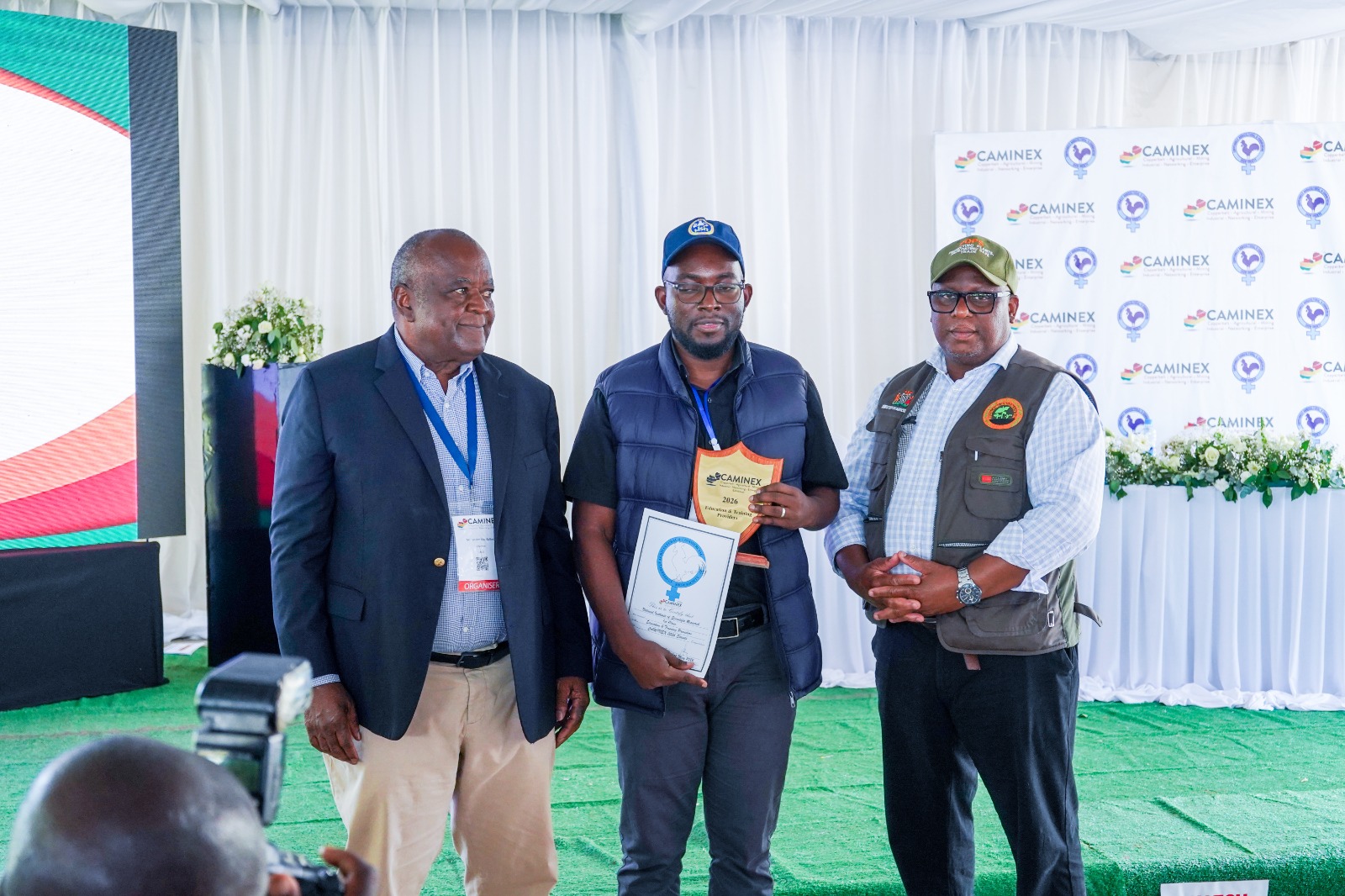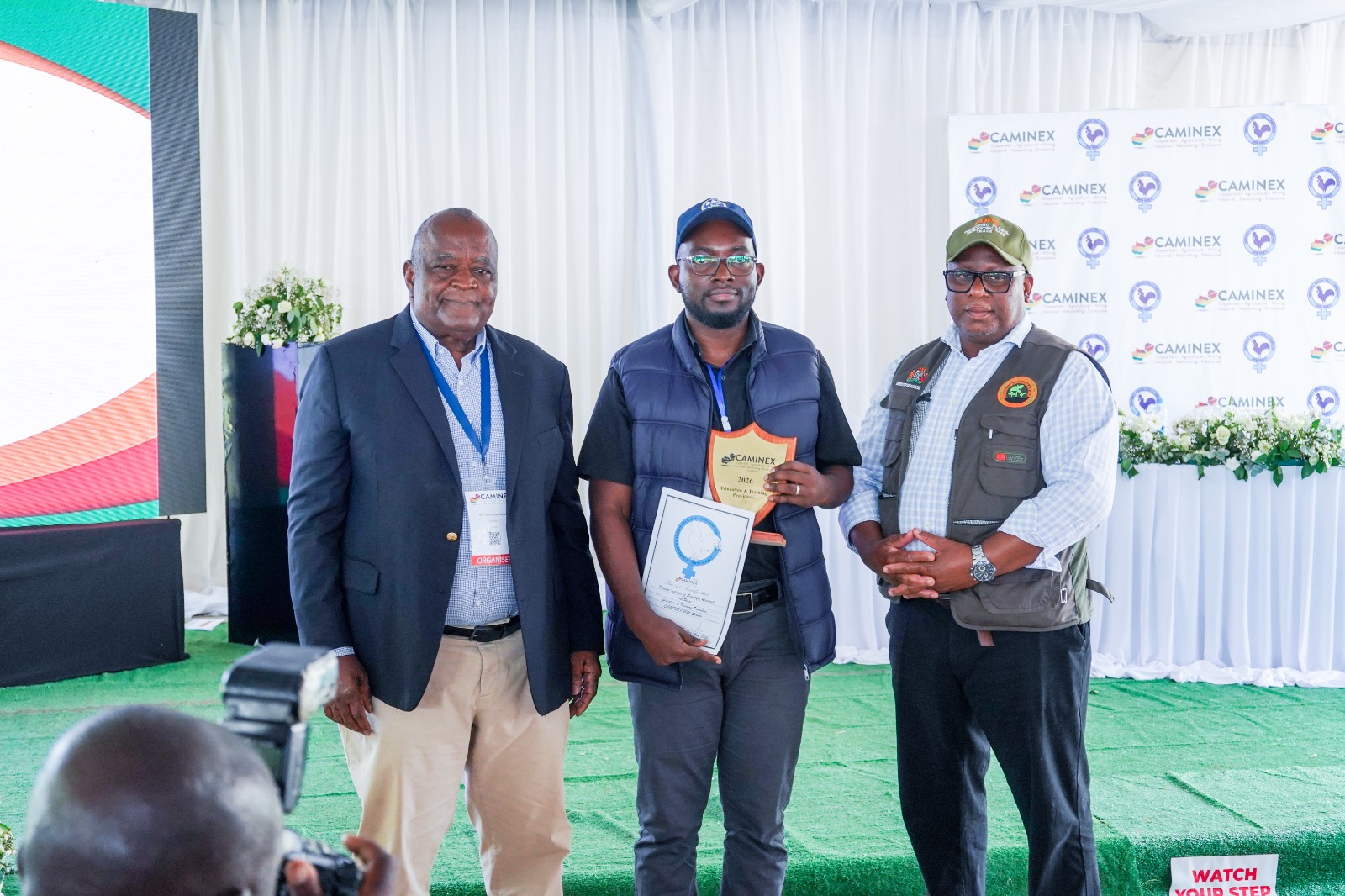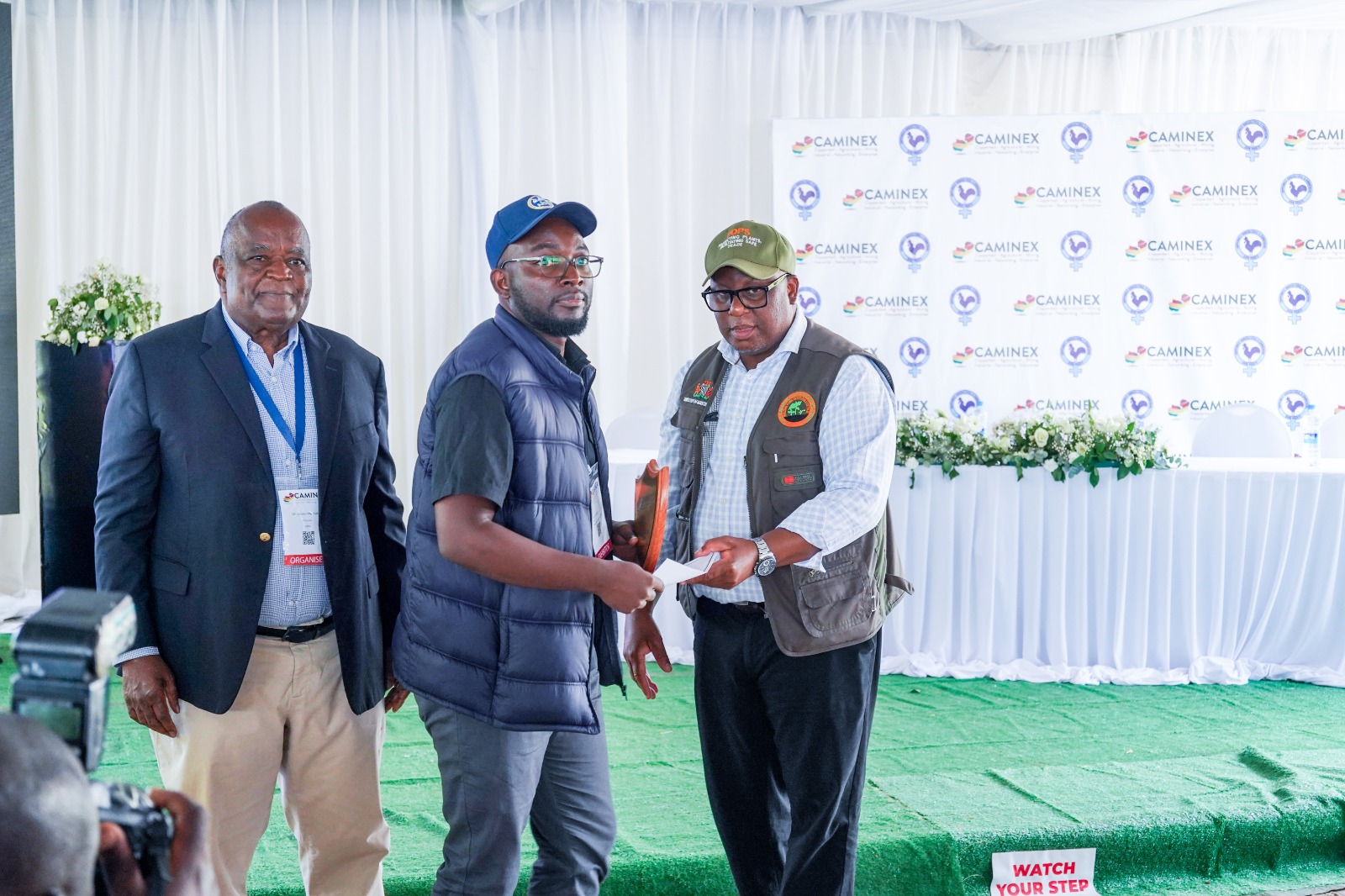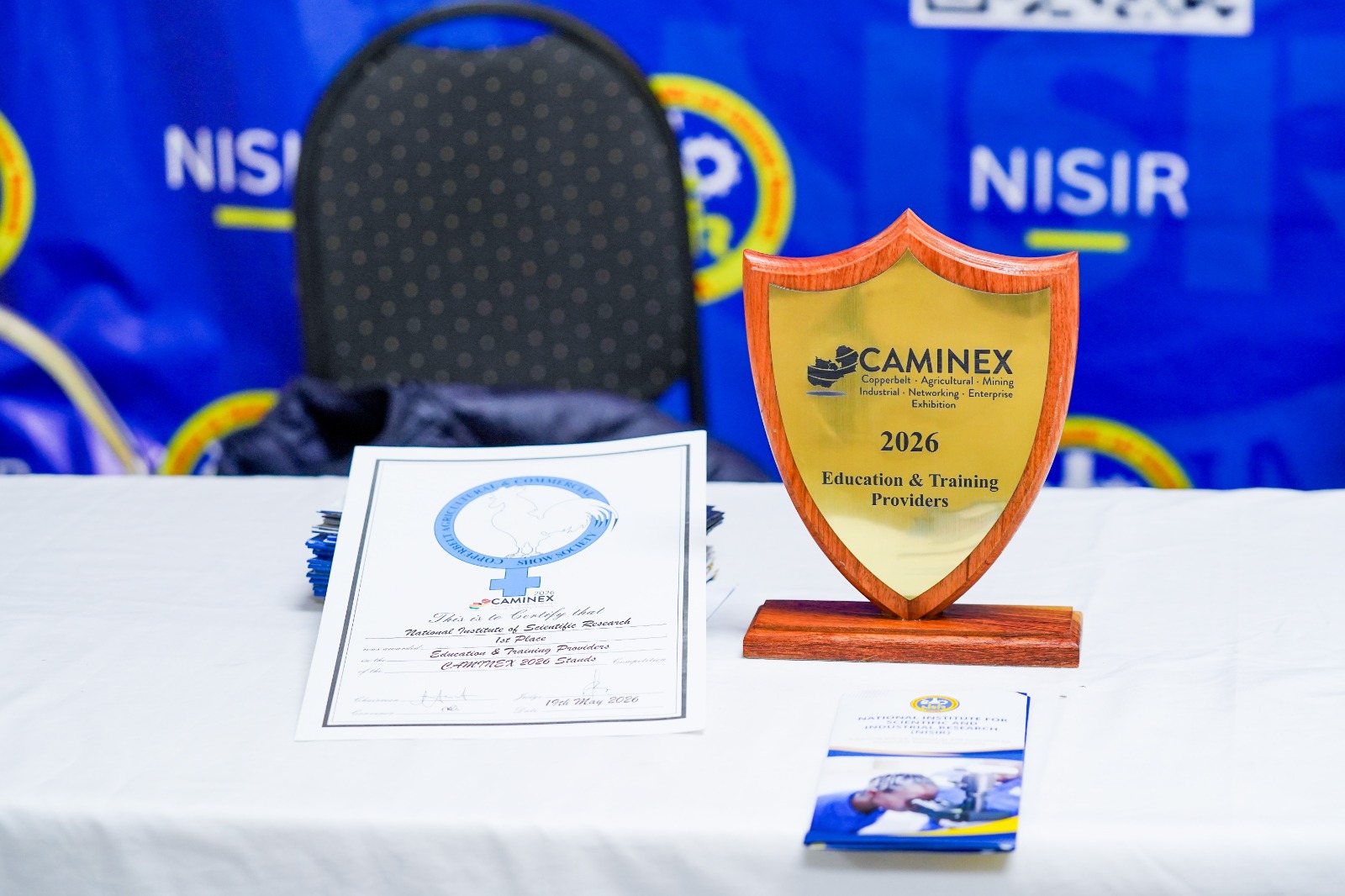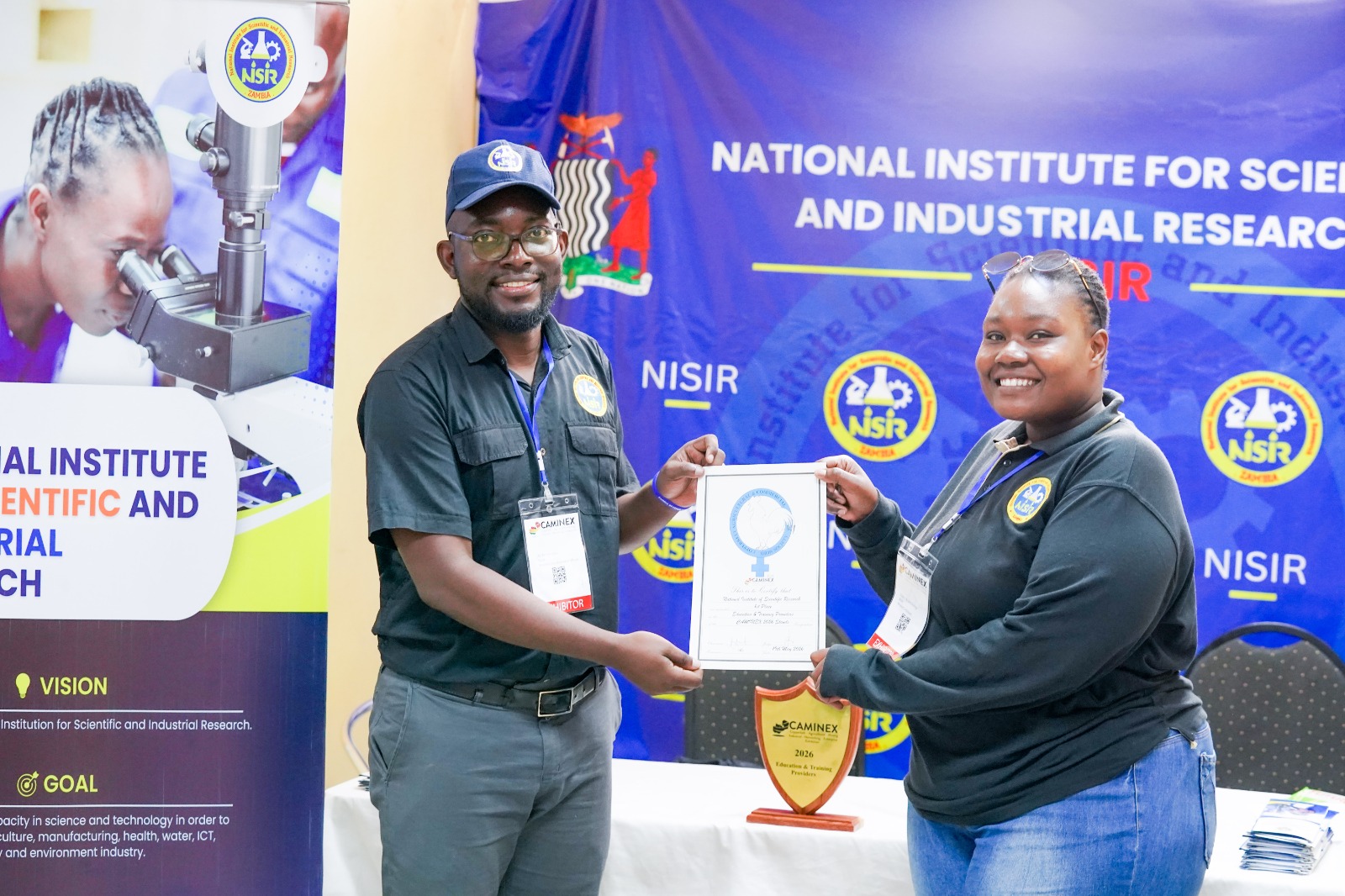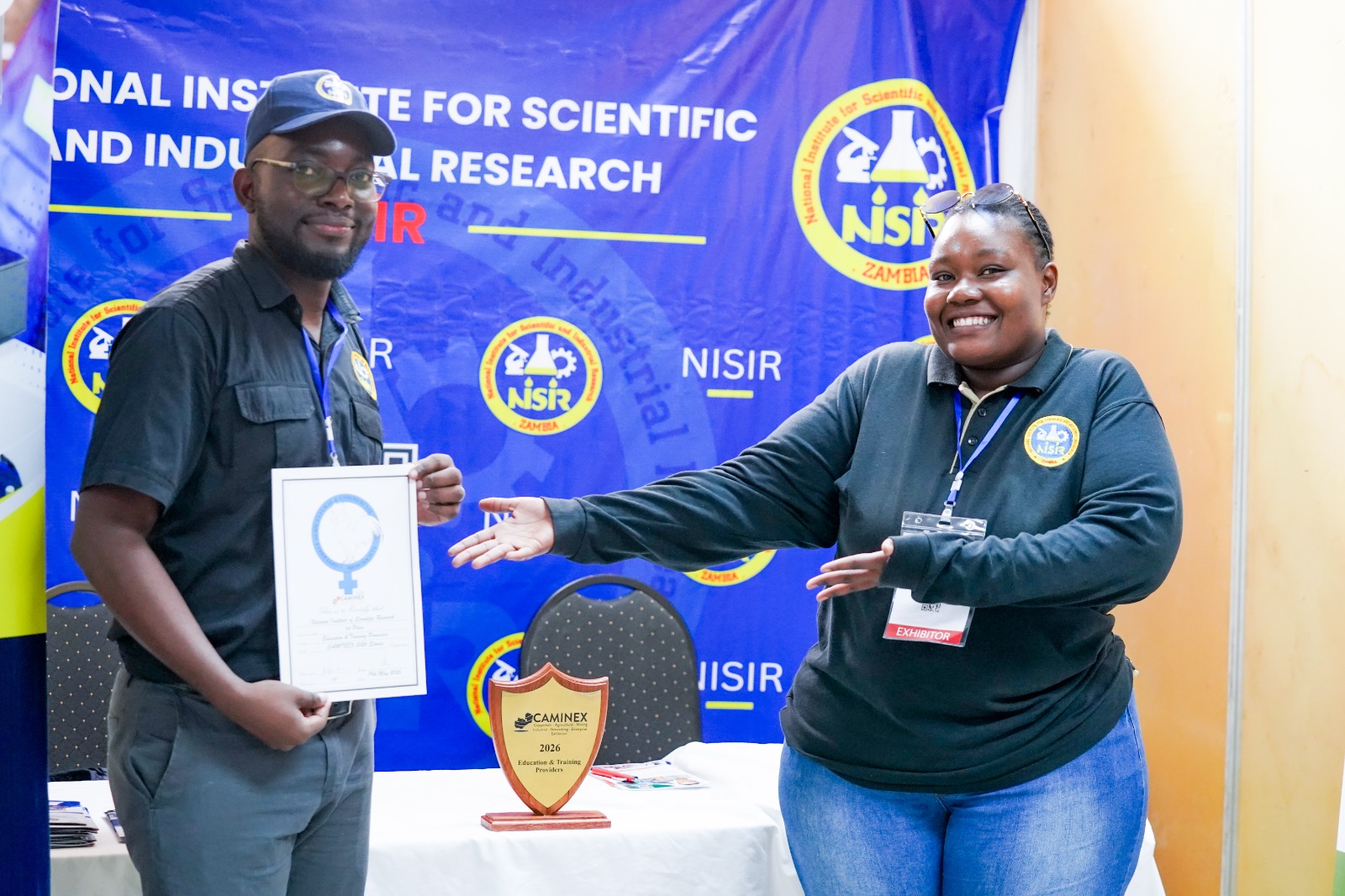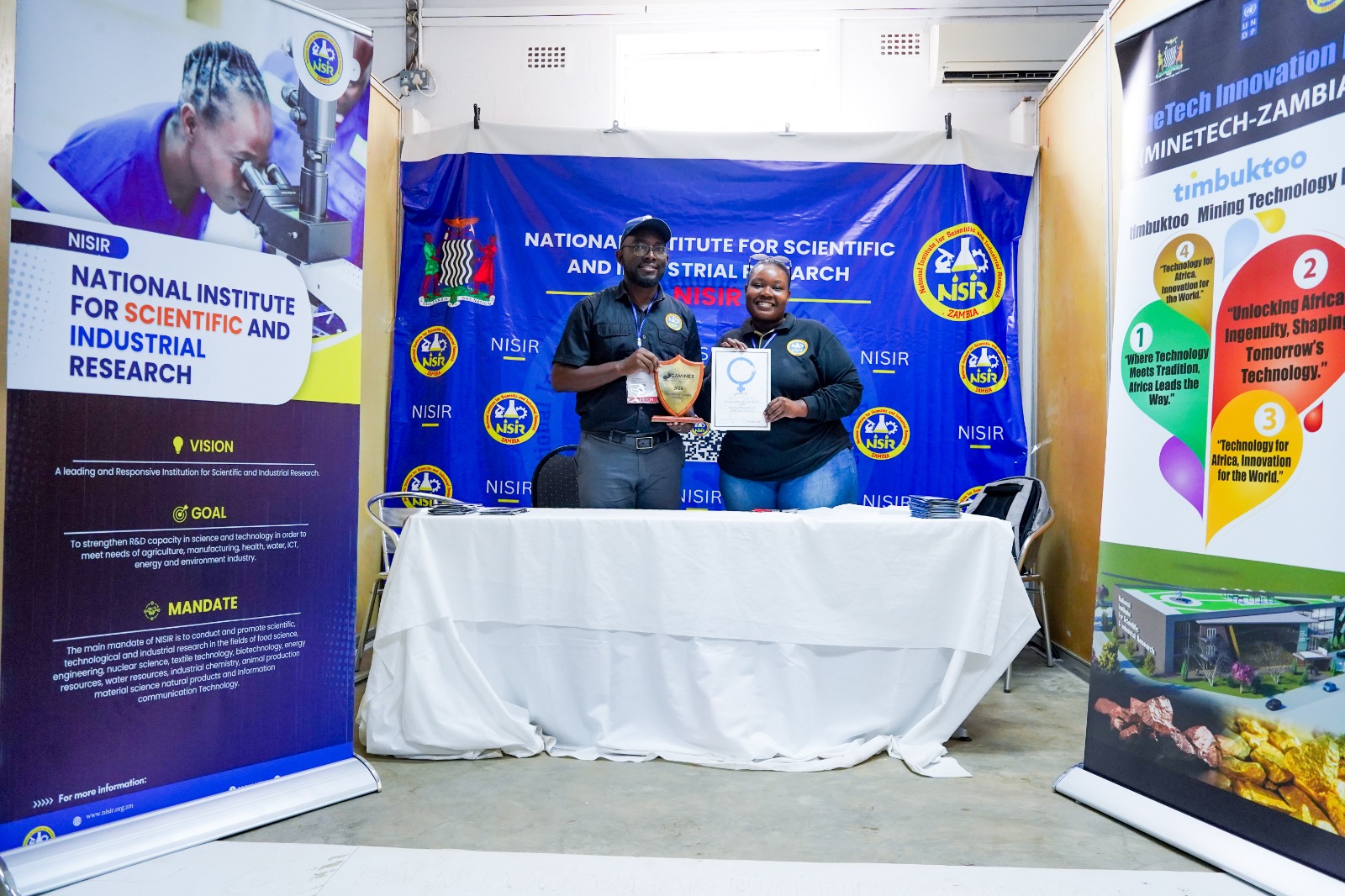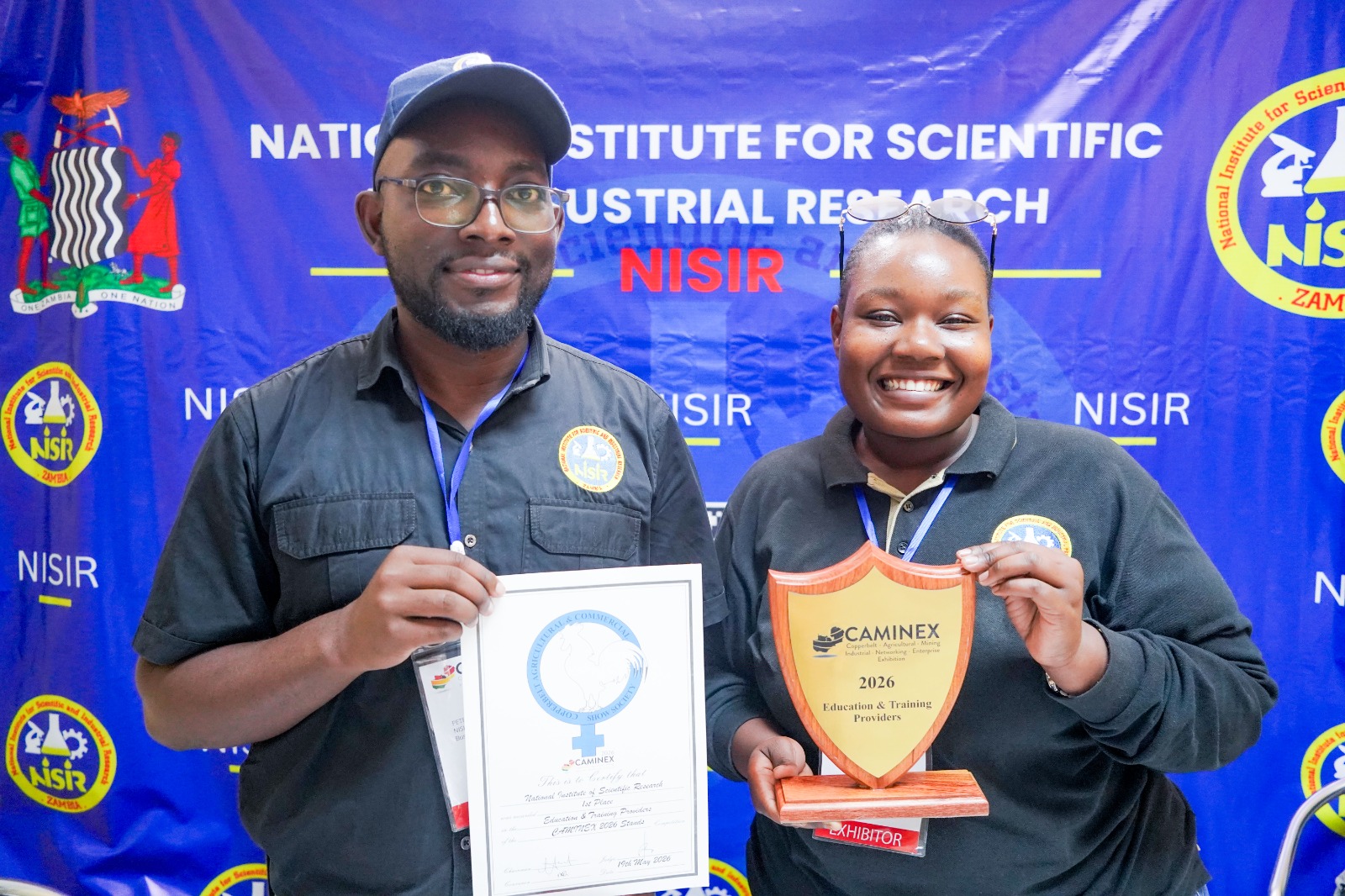
The National Institute for Scientific and Industrial Research (NISIR) has been honored with the prestigious Excellence in Education and Training award, recognizing the institute's outstanding commitment to developing Zambia's scientific workforce through hands-on learning opportunities.
NISIR conducts training through mentorship, internships, and attachments. It has trained many students from schools and universities through science study tours, with the aim of instilling a passion for studying science. The institute further encourages graduate trainees to explore opportunities available in STEM and supports skills transfer through access to laboratory facilities. In recognition of these efforts, NISIR received an award for Excellence in Education and Training.
A Legacy of Developing Scientific Talent
For decades, NISIR has served as a crucial bridge between theoretical education and practical scientific application. The institute's comprehensive training programs have touched thousands of students—from primary school learners discovering the wonder of laboratory experiments to university graduates honing specialized research skills.
"This award belongs to every student who has walked through our doors with curiosity and left with confidence. It belongs to every mentor who has shared their expertise generously. At NISIR, we believe that investing in training is investing in Zambia's scientific future."
Mentorship: The Heart of NISIR's Approach
Central to NISIR's training philosophy is mentorship. Unlike traditional classroom instruction, the institute pairs trainees with experienced researchers who guide them through real-world scientific challenges. This approach has proven particularly effective for graduate trainees, who gain not only technical skills but also professional networks and career guidance.
"When I joined NISIR as a graduate trainee, I had theoretical knowledge but little practical experience," recalls Dr. Patricia Mwansa, now a senior researcher at the institute. "My mentor walked me through every step—from sample preparation to data analysis to publishing results. That experience shaped my entire career."
Internships and Attachments: Building Career Pathways
NISIR's internship and attachment programs provide structured, time-bound learning experiences for students at various academic levels. These programs are designed not as passive observation but as active participation in ongoing research projects. Interns contribute meaningfully to NISIR's research agenda while developing marketable skills.
- Undergraduate Attachments: 8-12 week programs exposing students to laboratory techniques, research ethics, and scientific documentation.
- Graduate Internships: 6-month intensive research experiences aligned with students' thesis work and career goals.
- Postgraduate Fellowships: Advanced training opportunities for recent graduates seeking specialized research experience.
- Professional Attachments: Short-term programs for working professionals seeking to upgrade their skills.
Science Study Tours: Inspiring the Next Generation
One of NISIR's most impactful initiatives is its science study tour program, which brings students from primary and secondary schools directly into the research environment. These tours are carefully designed to demystify science and make research careers tangible for young learners.
During a typical study tour, students visit working laboratories, interact with researchers, participate in age-appropriate experiments, and learn about the real-world applications of science. The impact is measurable: surveys show that over 80% of participating students express increased interest in pursuing science subjects after their NISIR visit.
"Before coming to NISIR, I thought science was just memorizing formulas from a textbook," says Mary Chanda, a grade 10 student who participated in a study tour. "Now I see that science is about discovery, about solving problems, about helping people. I want to be a researcher."
Access to Laboratory Facilities: Democratizing Science
NISIR recognizes that skills transfer requires more than instruction—it requires access. The institute has opened its laboratory facilities to trainees, providing hands-on experience with equipment and methodologies that might otherwise be inaccessible. This access is particularly valuable for students from institutions with limited laboratory resources.
The institute's laboratory access program includes supervised use of analytical instruments, preparation of samples, data collection and analysis, and exposure to quality control and quality assurance protocols. Under expert supervision, trainees develop confidence and competence that serve them throughout their careers.
Encouraging STEM Exploration
Beyond structured programs, NISIR actively encourages graduate trainees and young professionals to explore the full range of opportunities available in STEM fields. Through career talks, networking events, and exposure to diverse research areas, the institute helps trainees identify their passions and chart their professional paths.
"STEM is not a single track," explains Margaret Chisanga, Training Coordinator at NISIR. "There are careers in research, in industry, in policy, in education, in entrepreneurship. We help trainees see the possibilities and find the path that fits their strengths and interests."
The Excellence in Education and Training Award
The Excellence in Education and Training award was presented to NISIR at the National Science and Technology Forum Annual Gala, held in Lusaka on March 12, 2026. The award recognizes institutions that demonstrate exceptional commitment to developing scientific human capital.
In presenting the award, the judging panel cited NISIR's "comprehensive approach to training that spans from primary school outreach to postgraduate research, its commitment to mentorship, and its success in inspiring young Zambians to pursue STEM careers." The panel also noted the institute's "unprecedented willingness to open its laboratory facilities to trainees from diverse backgrounds."
Looking Ahead: Expanding Impact
With this recognition, NISIR has announced plans to expand its training programs. Priorities for the coming year include launching a virtual mentorship program to reach students in remote areas, developing standardized training modules that can be shared with other institutions, establishing formal articulation agreements with universities for credit-bearing internships, and creating an alumni network to connect past trainees with current students.
"This award is not an endpoint but a milestone," says Dr. Banda. "We are more committed than ever to our mission of developing scientific talent. The future of Zambia's industrial and scientific development depends on the young people we train today. We will not let them down."